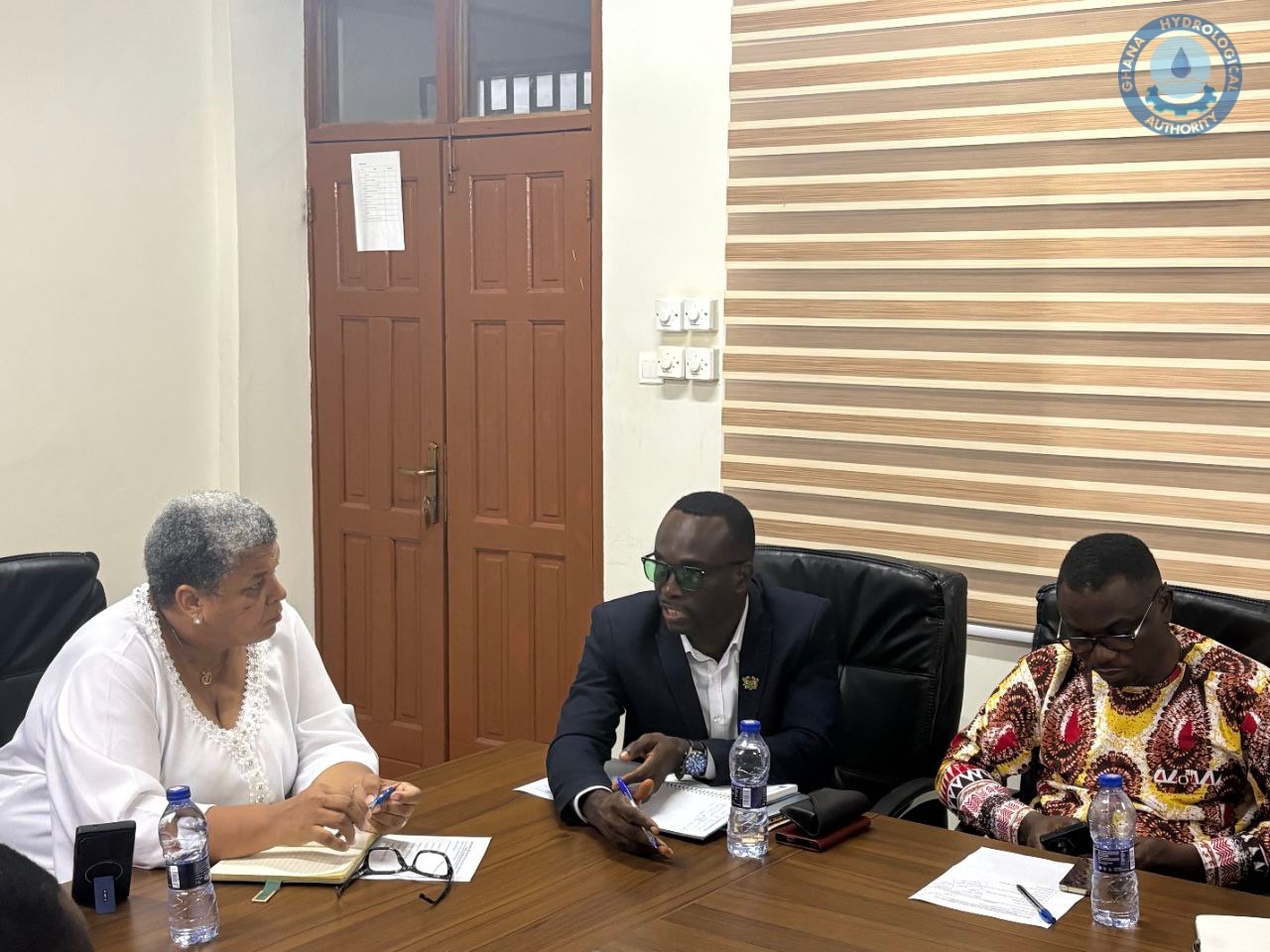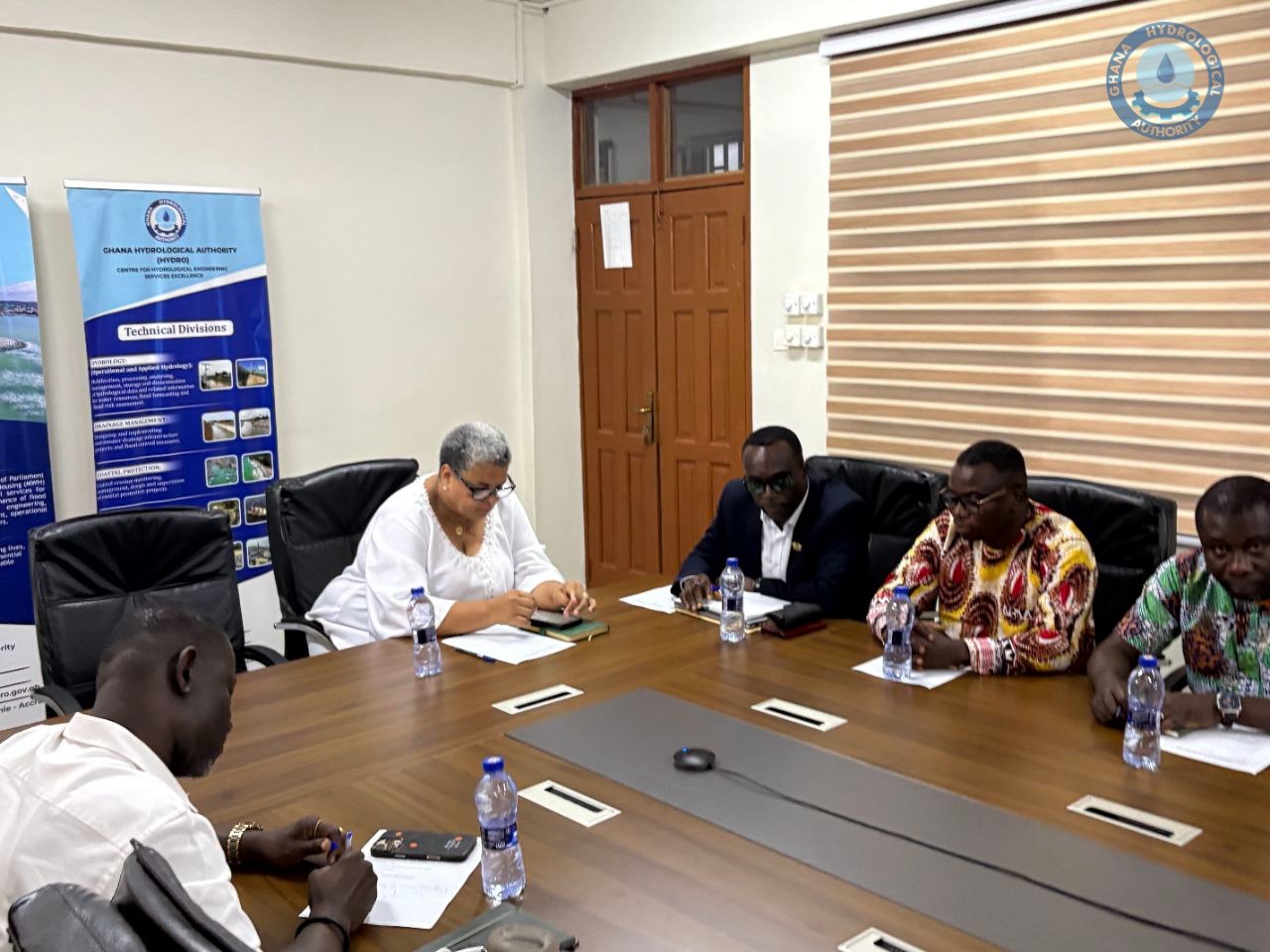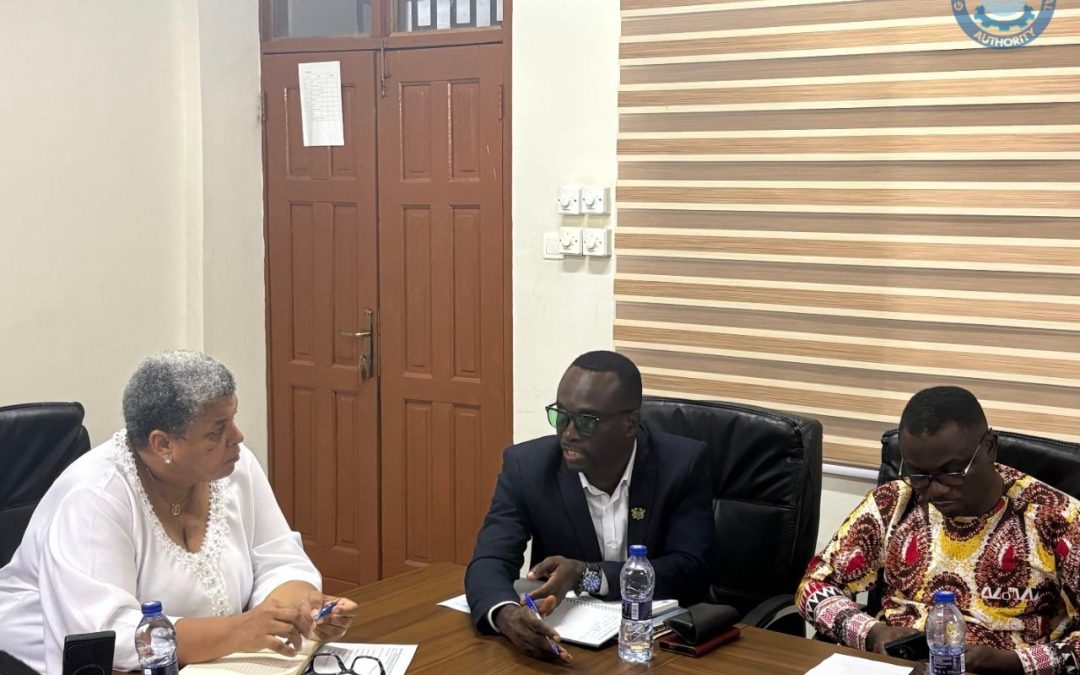
HYDRO’s Management has held a strategic meeting with the Deputy Minister for Works, Housing and Water Resources, Hon. (Mrs.) Gizella Tetteh-Agbotui, to discuss both immediate and long-term interventions aimed at reducing the impact of flooding across Ghana and strengthening national flood resilience.
The engagement formed part of ongoing efforts to enhance coordination among key stakeholders responsible for flood risk management, disaster preparedness, infrastructure planning and community protection.
Opening the meeting, the Chief Executive Officer of HYDRO, Dr. Sylvester Darko, outlined a number of measures the institution has undertaken in recent years to support flood mitigation efforts, particularly within the Greater Accra Region and other flood-prone areas.
Dr. Darko noted that changing rainfall patterns, rapid urbanization and increasing development pressures have contributed to flooding in locations that were not previously identified as flood-prone. He stressed the importance of strengthening technical assessments to better understand the engineering and hydrological factors contributing to these emerging challenges.
As part of HYDRO’s efforts to enhance situational awareness and technical response, the CEO highlighted the establishment of a specialized flood monitoring initiative comprising technical personnel and engineers tasked with conducting assessments of reported flood incidents and known flood hotspots. The objective is to support data-driven decision-making through the identification of underlying causes and the development of appropriate engineering recommendations.
The CEO further briefed the Deputy Minister on ongoing institutional efforts to strengthen information gathering and coordination mechanisms to support flood management decision-making. These efforts are intended to improve the collection of field information and facilitate timely technical assessments that can inform response planning and future interventions.
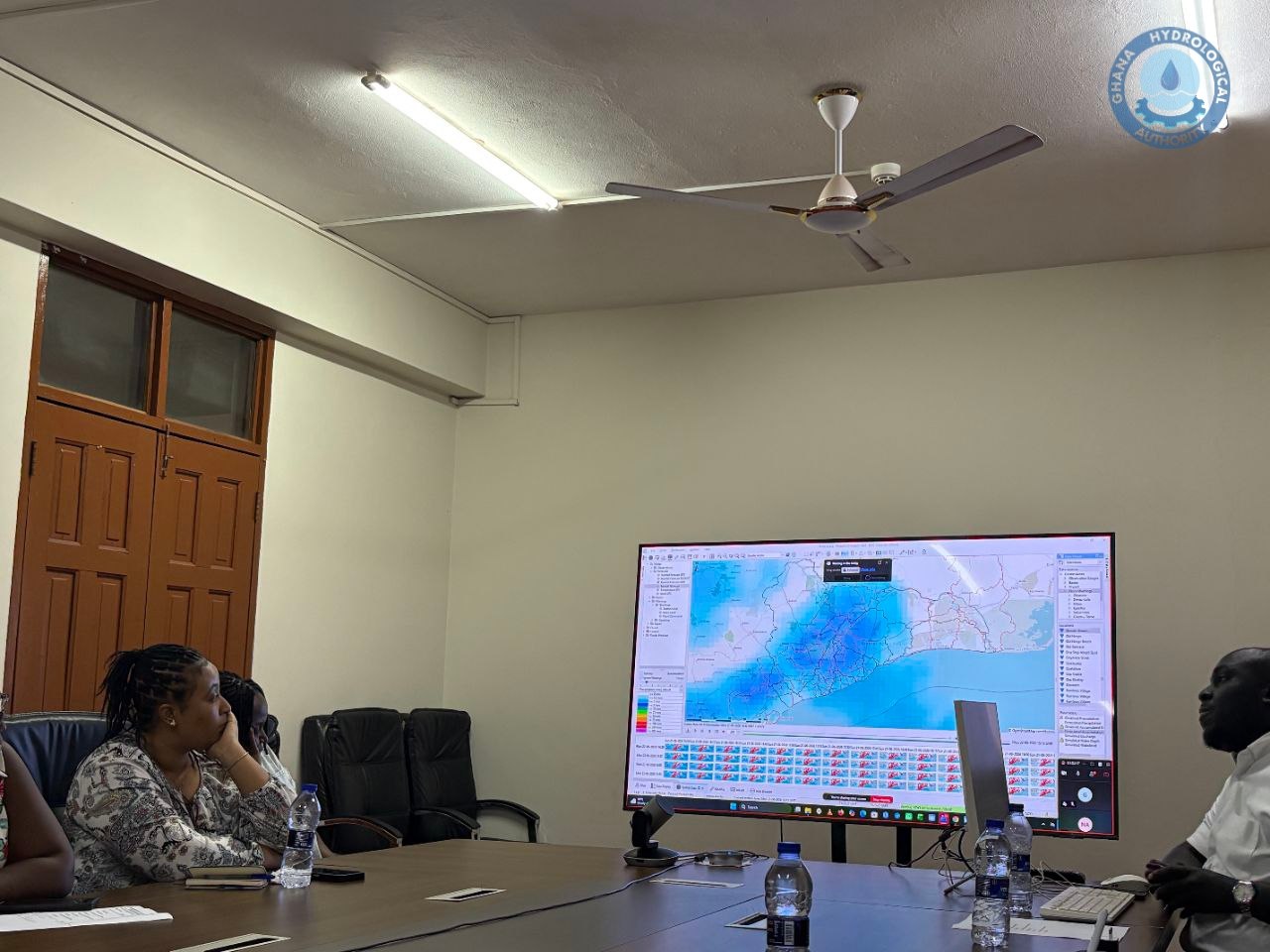
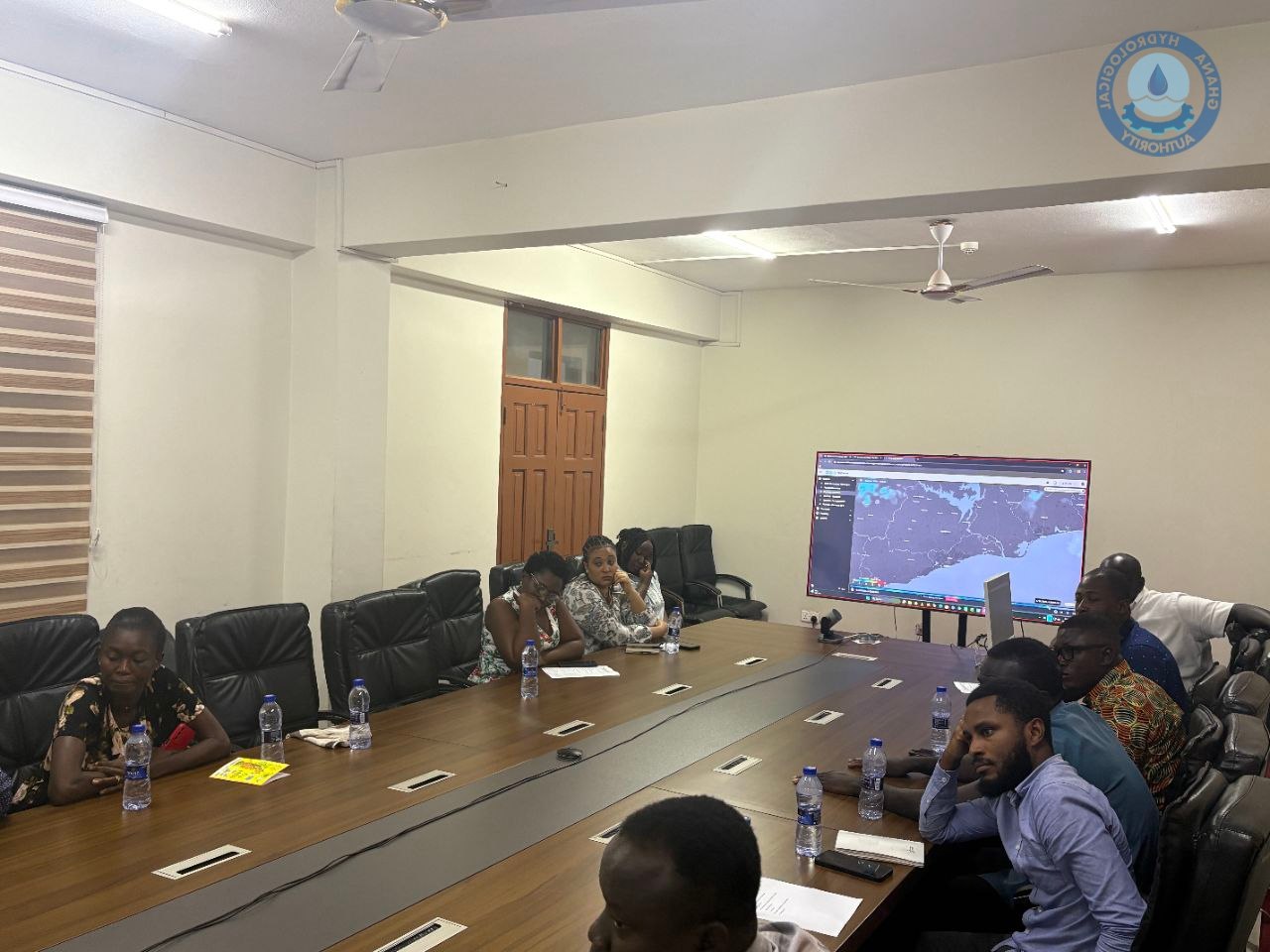
The meeting also provided an opportunity to showcase a newly developed Flood Early Warning System for the Greater Accra Region under the Greater Accra Resilient and Integrated Development (GARID) Project. The system is designed to support disaster preparedness by providing short-term flood forecasts with an anticipated lead time of approximately three hours.
When fully operational, the platform is expected to support emergency response agencies, local authorities and disaster management institutions by providing advanced notice of potential flood events, thereby enabling proactive measures to reduce risks to lives and property. The system represents an important step towards the integration of technology and scientific forecasting into Ghana’s flood risk management framework.
Dr. Darko also highlighted several interventions already being implemented by HYDRO, including technical assessments of flood-prone locations, stakeholder engagement activities, public education campaigns and the dissemination of flood safety information through the institution’s social media platforms. These awareness initiatives seek to educate citizens on personal safety measures during flood events, as well as practical actions communities can take to reduce local flooding risks.
The CEO further reiterated HYDRO’s commitment to supporting efforts aimed at preserving waterways, protecting river buffers and promoting responsible environmental practices that contribute to improved drainage and flood management outcomes.
In her remarks, Hon. (Mrs.) Gizella Tetteh-Agbotui underscored the importance of sustained public engagement and education as critical components of flood risk reduction. She emphasized the need to strengthen public understanding of flood alerts, preparedness measures and responsible environmental practices through strategic communication and continuous sensitization.
Featured images: