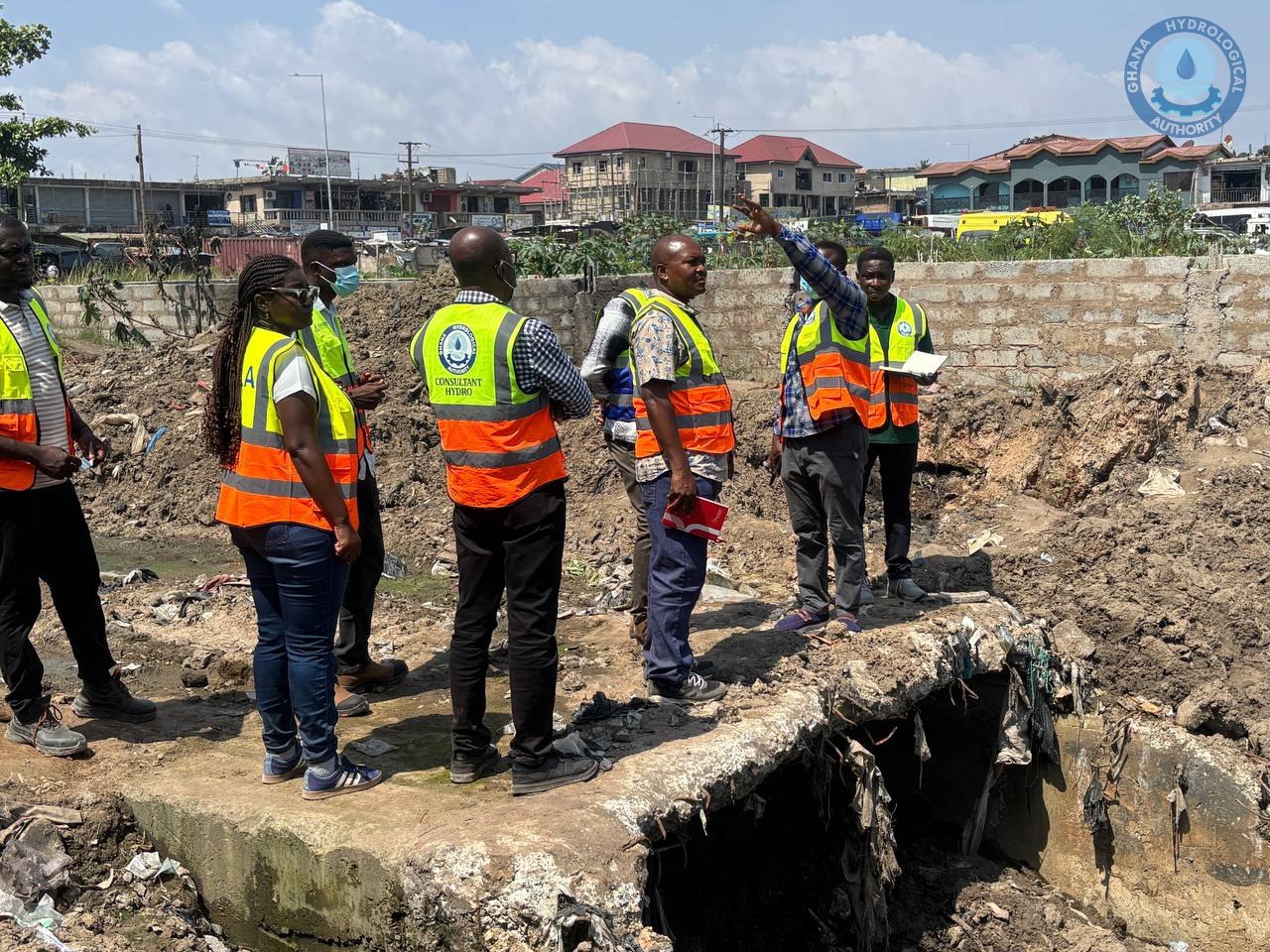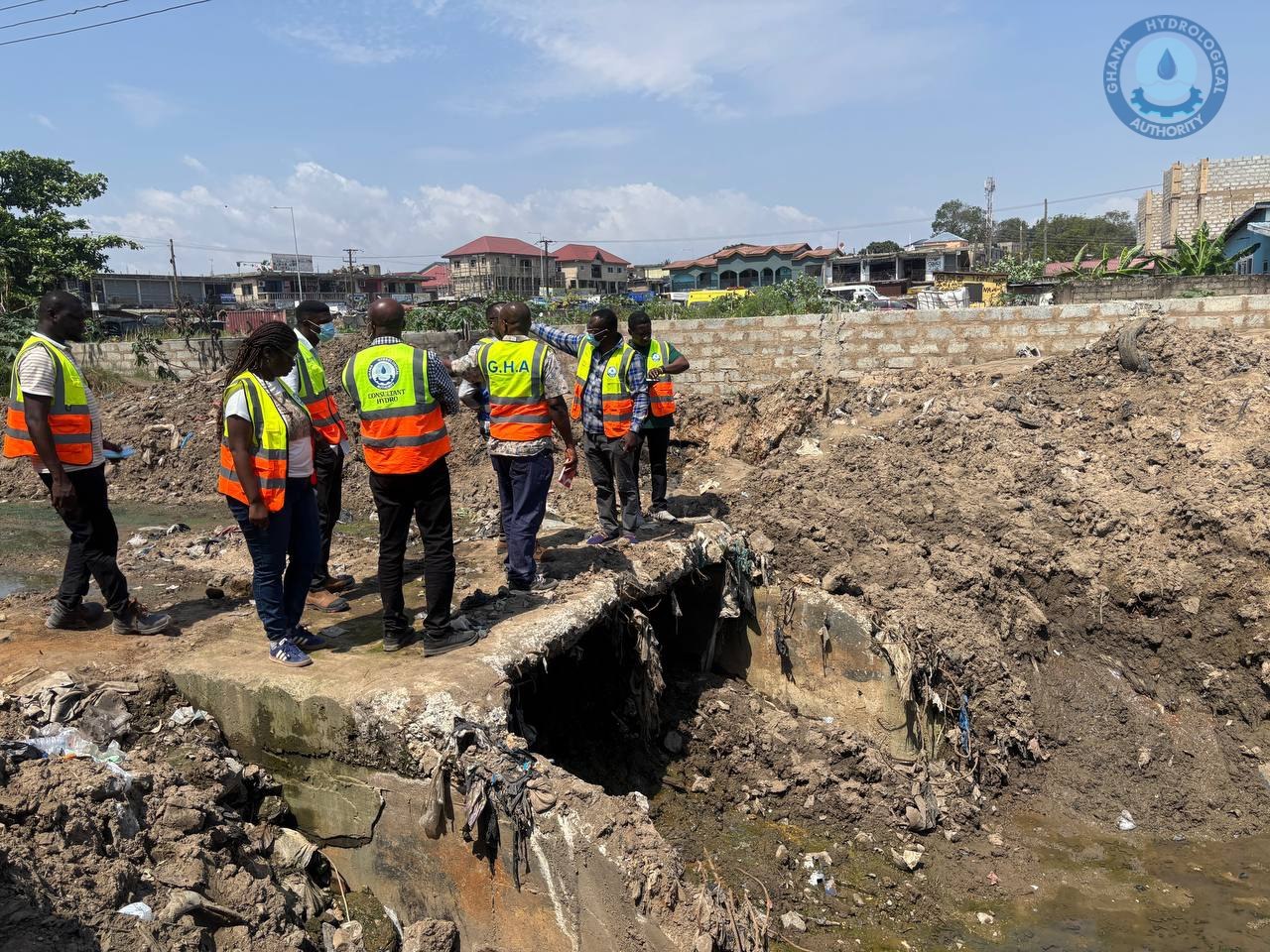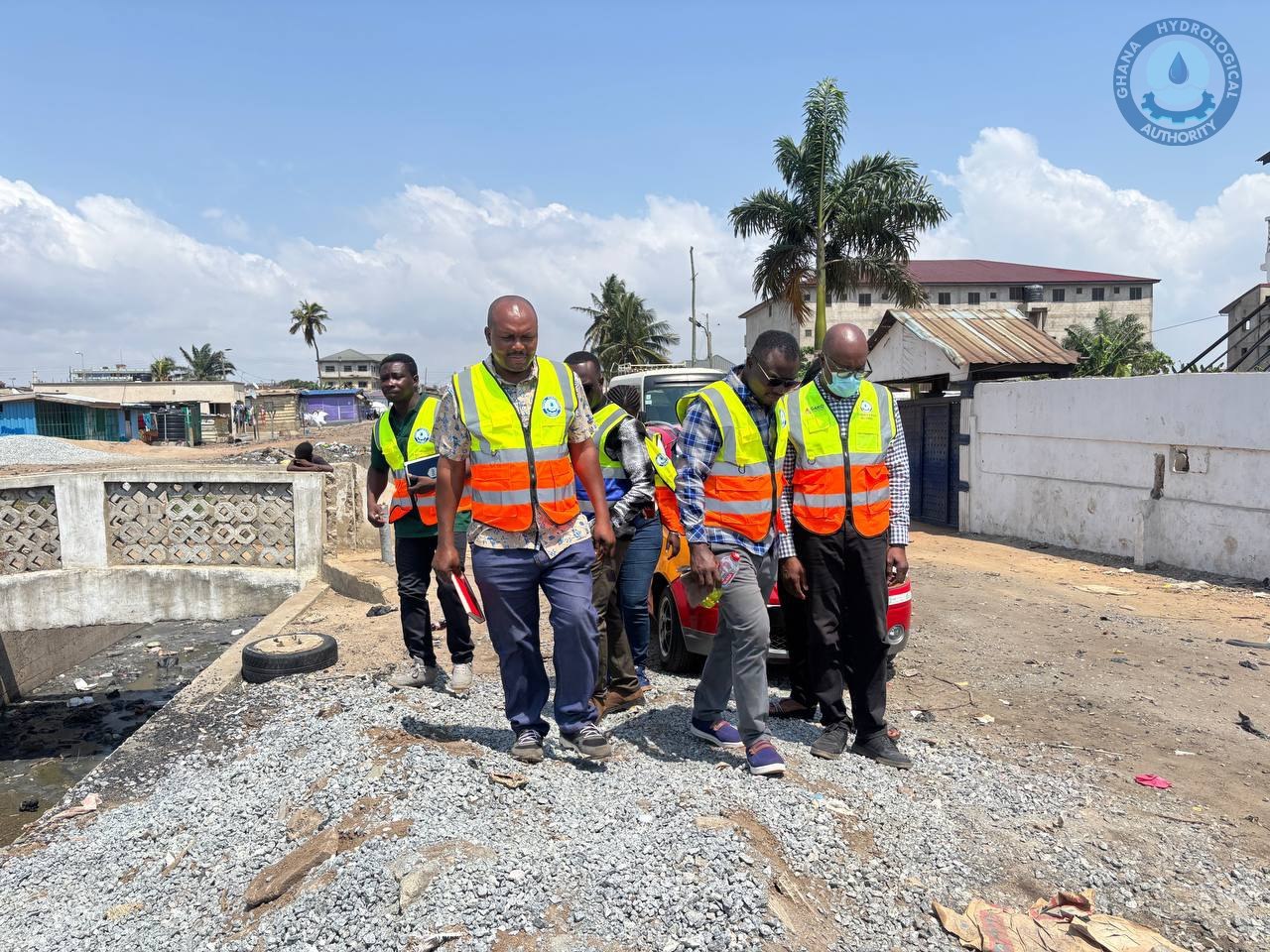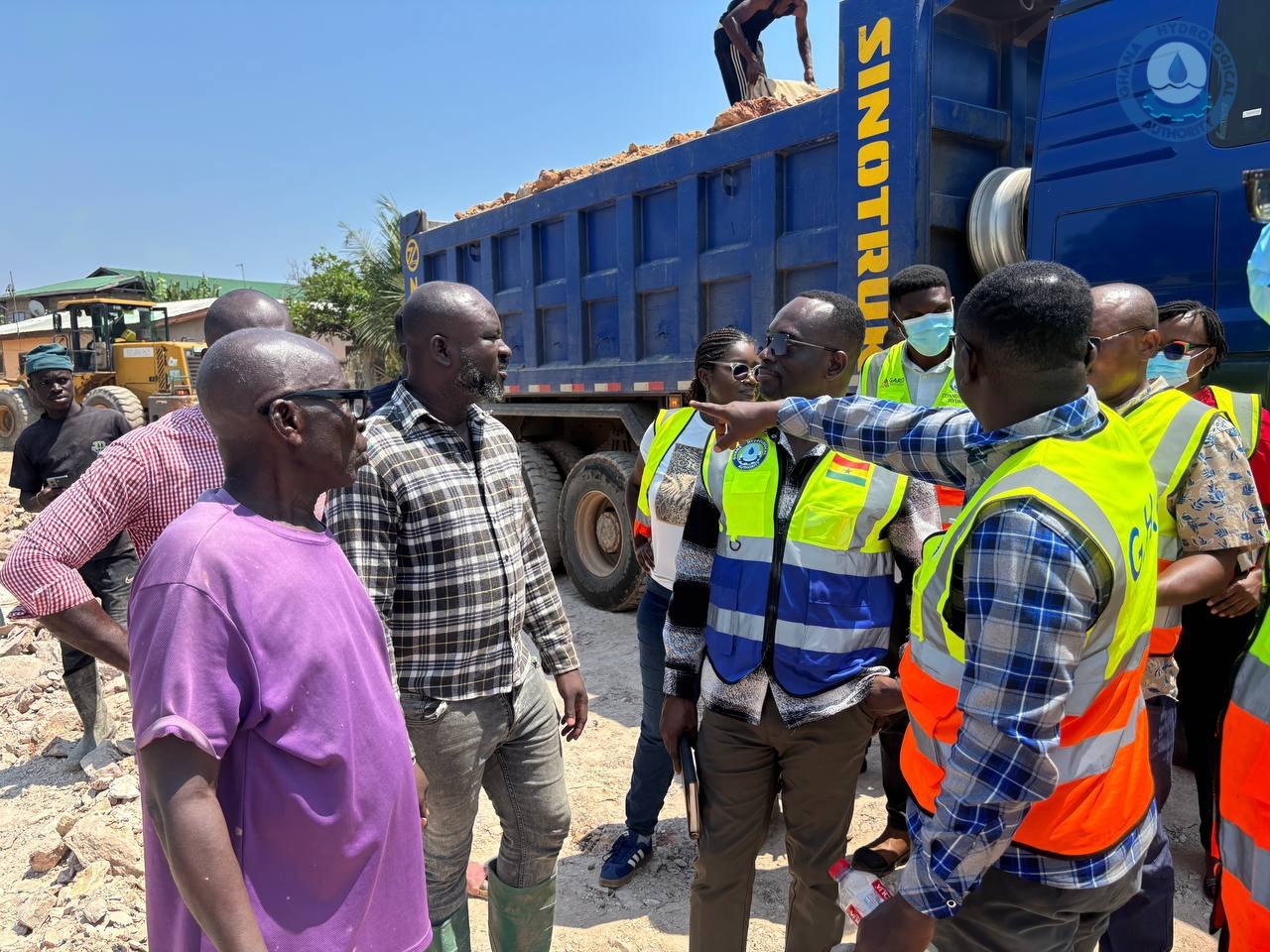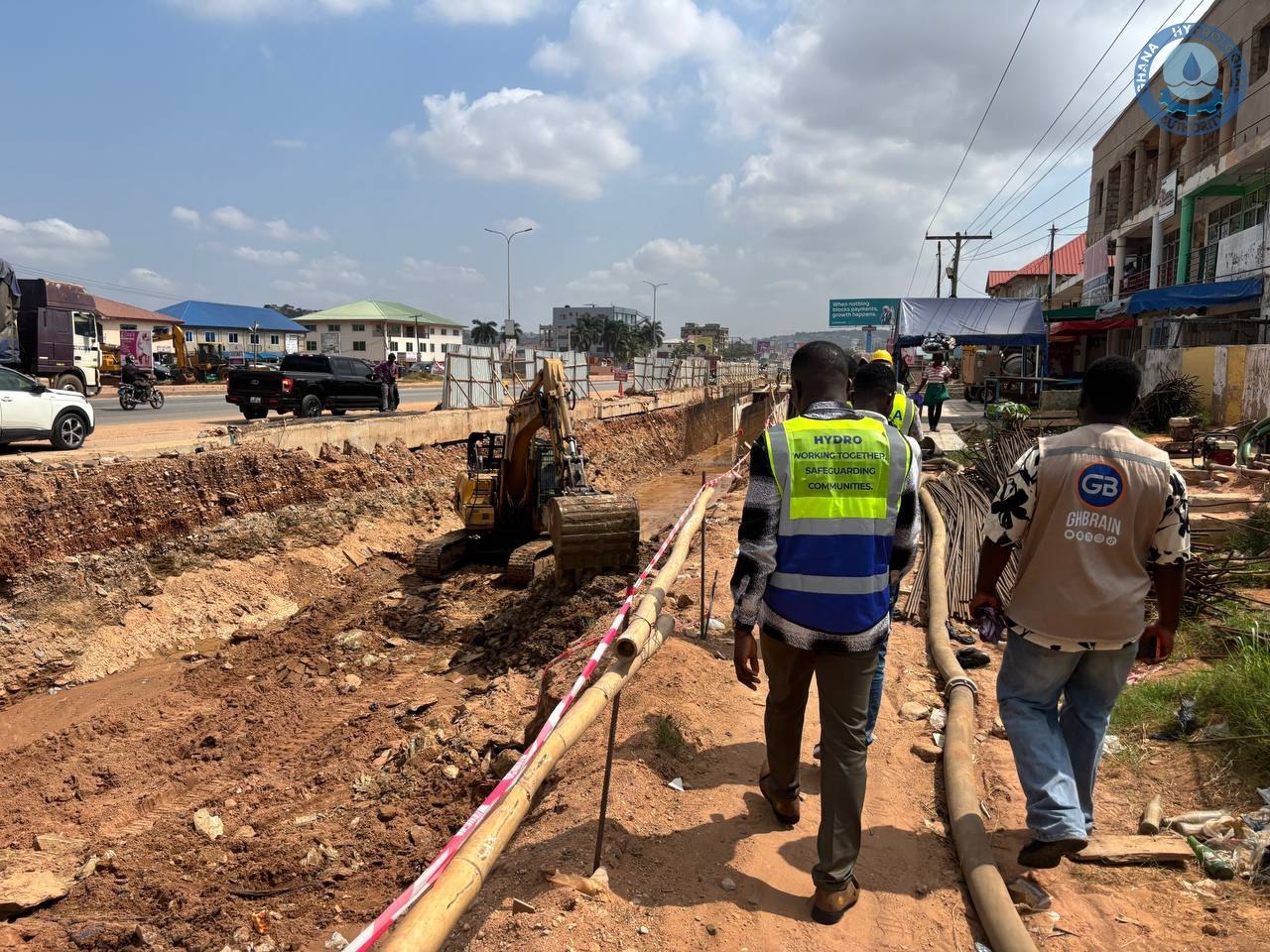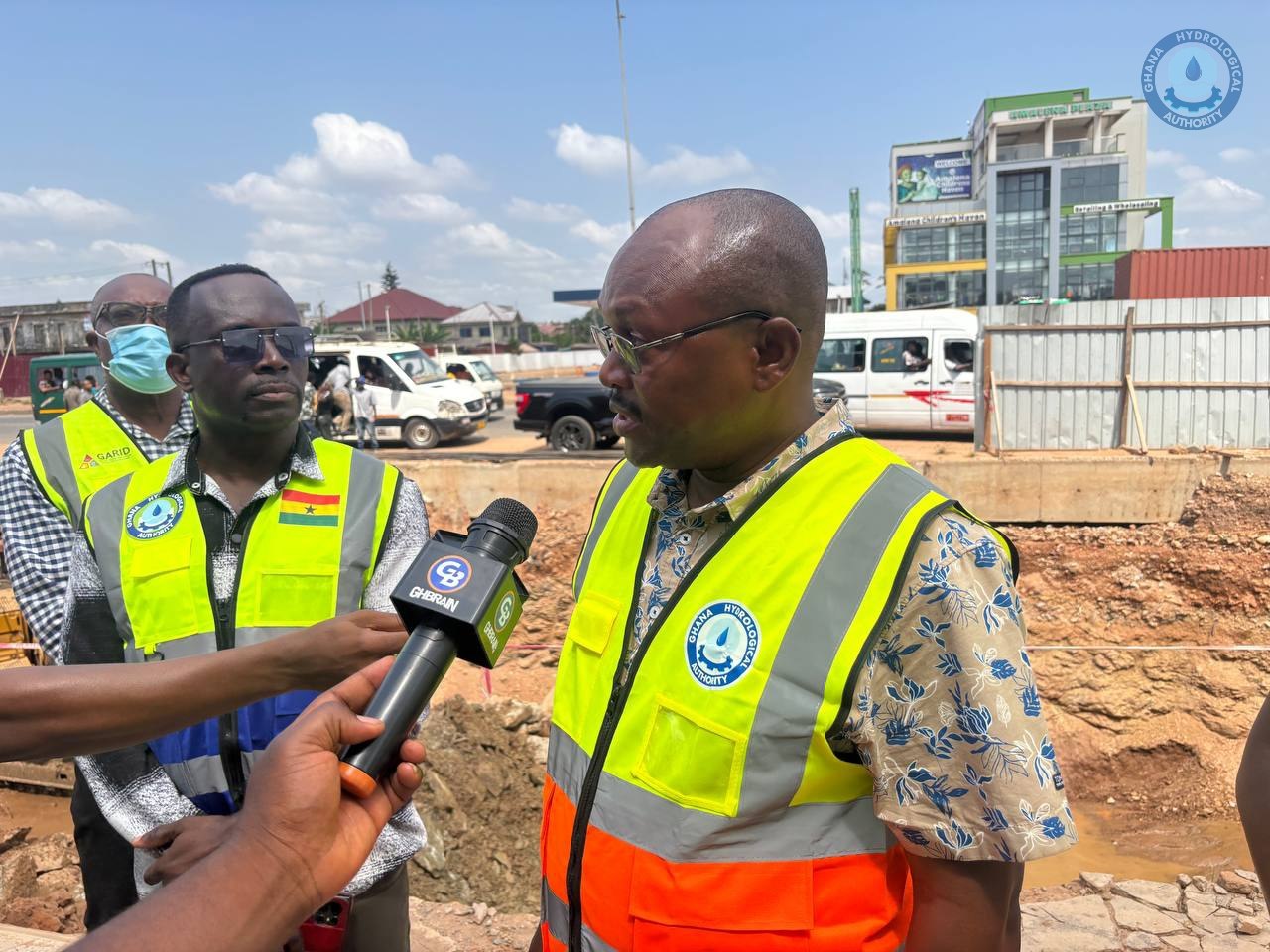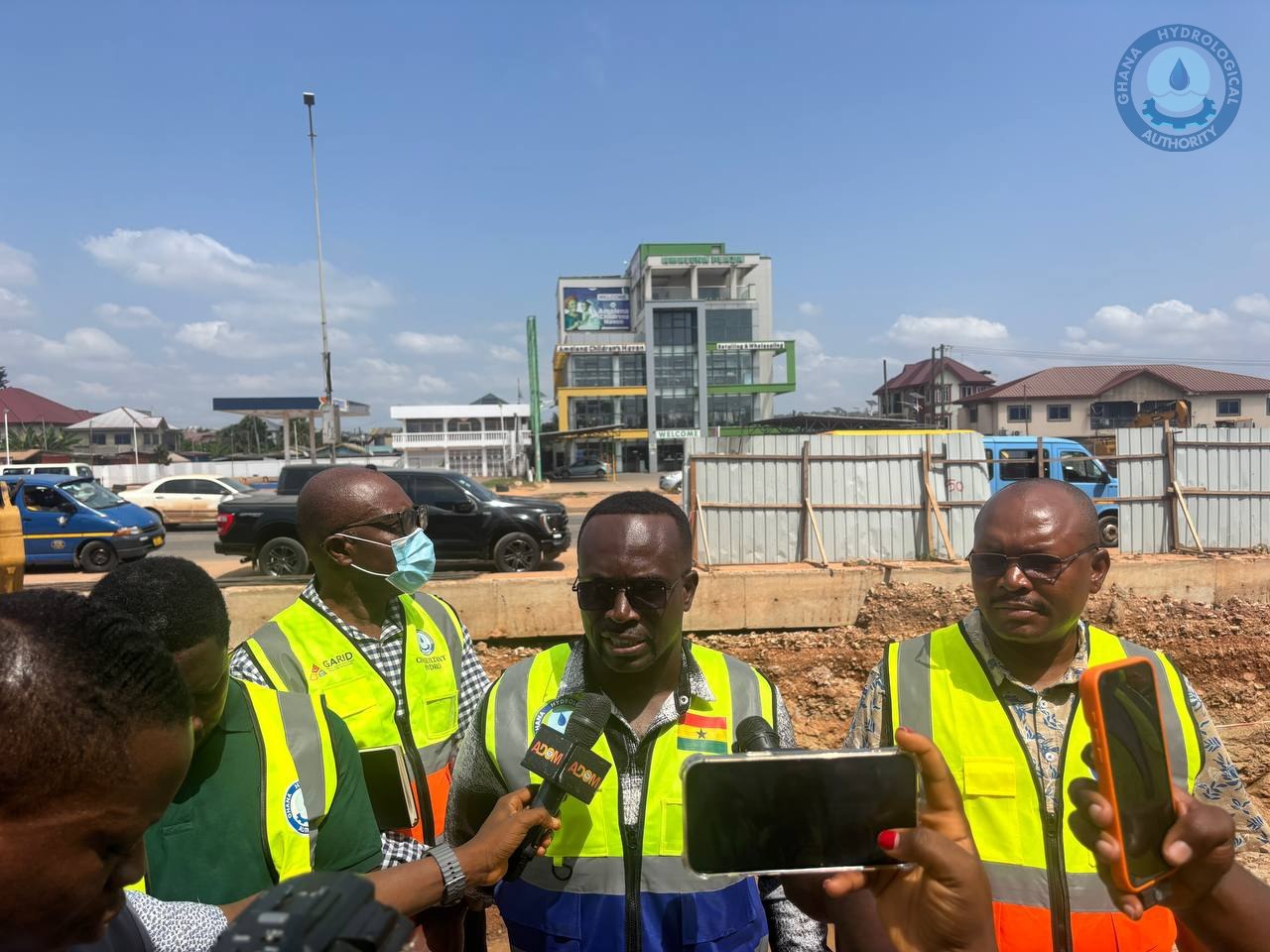
The Board of the Ghana Hydrological Authority (HYDRO) has undertaken a monitoring visit to selected storm drain construction sites in Accra under the 2026 National Flood Control Programme (NFCP) to assess progress and ensure the effective implementation of ongoing flood mitigation interventions.
The exercise forms part of the Authority’s commitment to providing oversight and monitoring of flood control projects aimed at addressing the persistent flooding challenges confronting communities across the country, particularly in the Greater Accra Region.
In response to the country’s recurring flooding incidents, the Government of Ghana, through the National Flood Control Programme and under the supervision of the Ghana Hydrological Authority, financed the construction of 77 storm drain projects and 163 channel improvement works nationwide in 2026.
These interventions are designed to improve stormwater conveyance, address drainage bottlenecks and reduce the vulnerability of communities to flooding. While a significant number of the channel improvement and desilting works have been completed, several storm drain construction projects are at various stages of implementation.
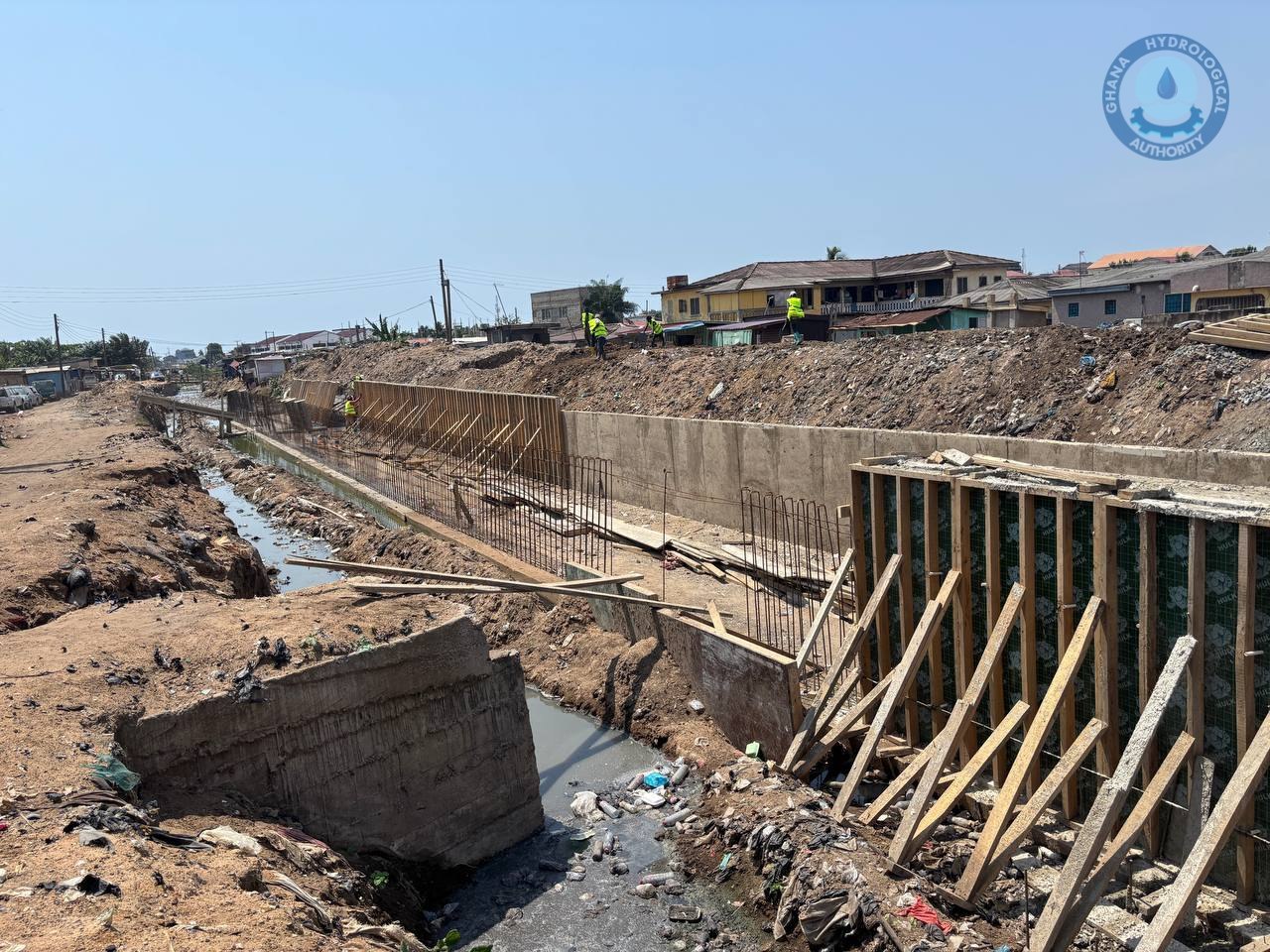
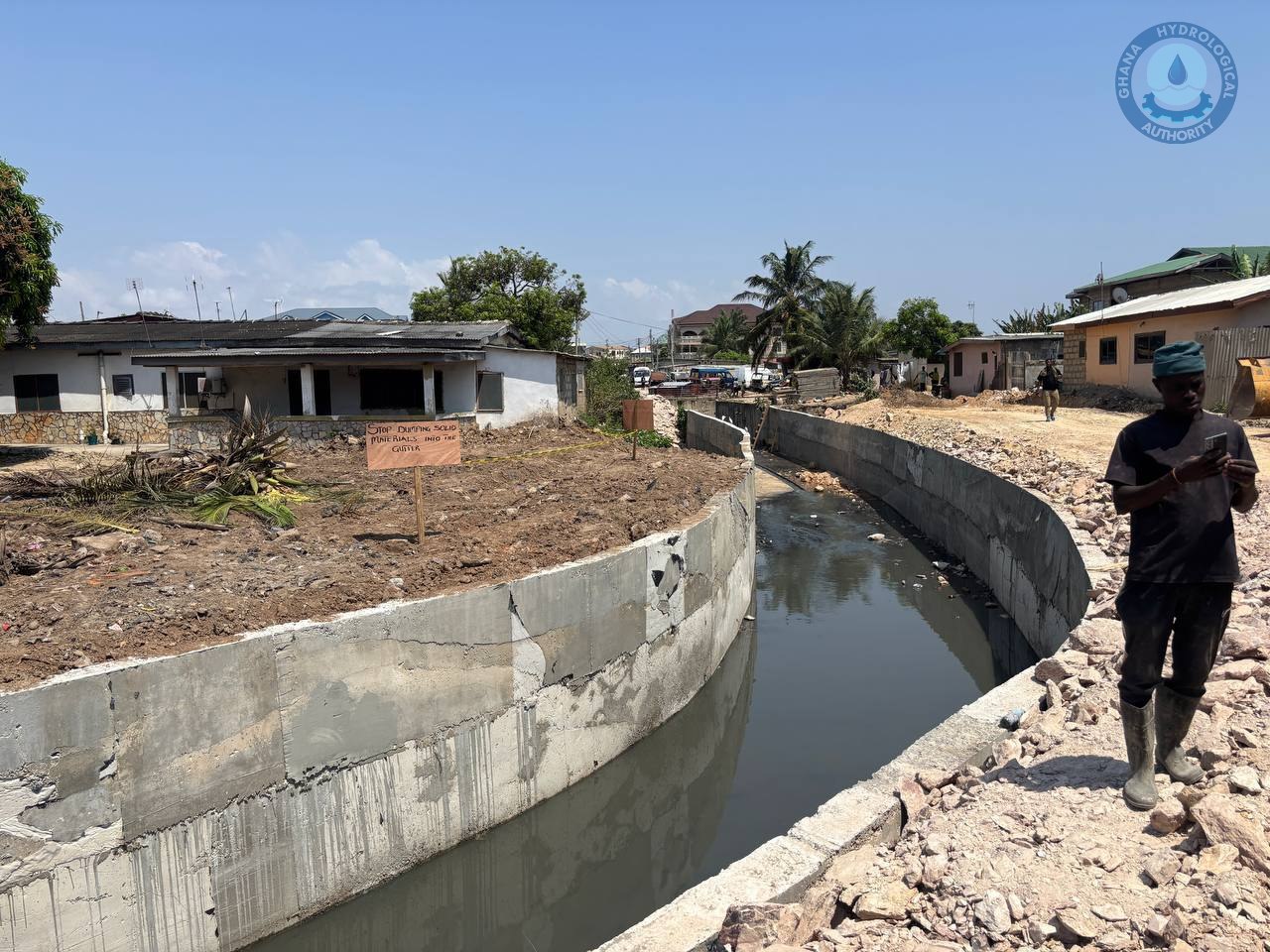
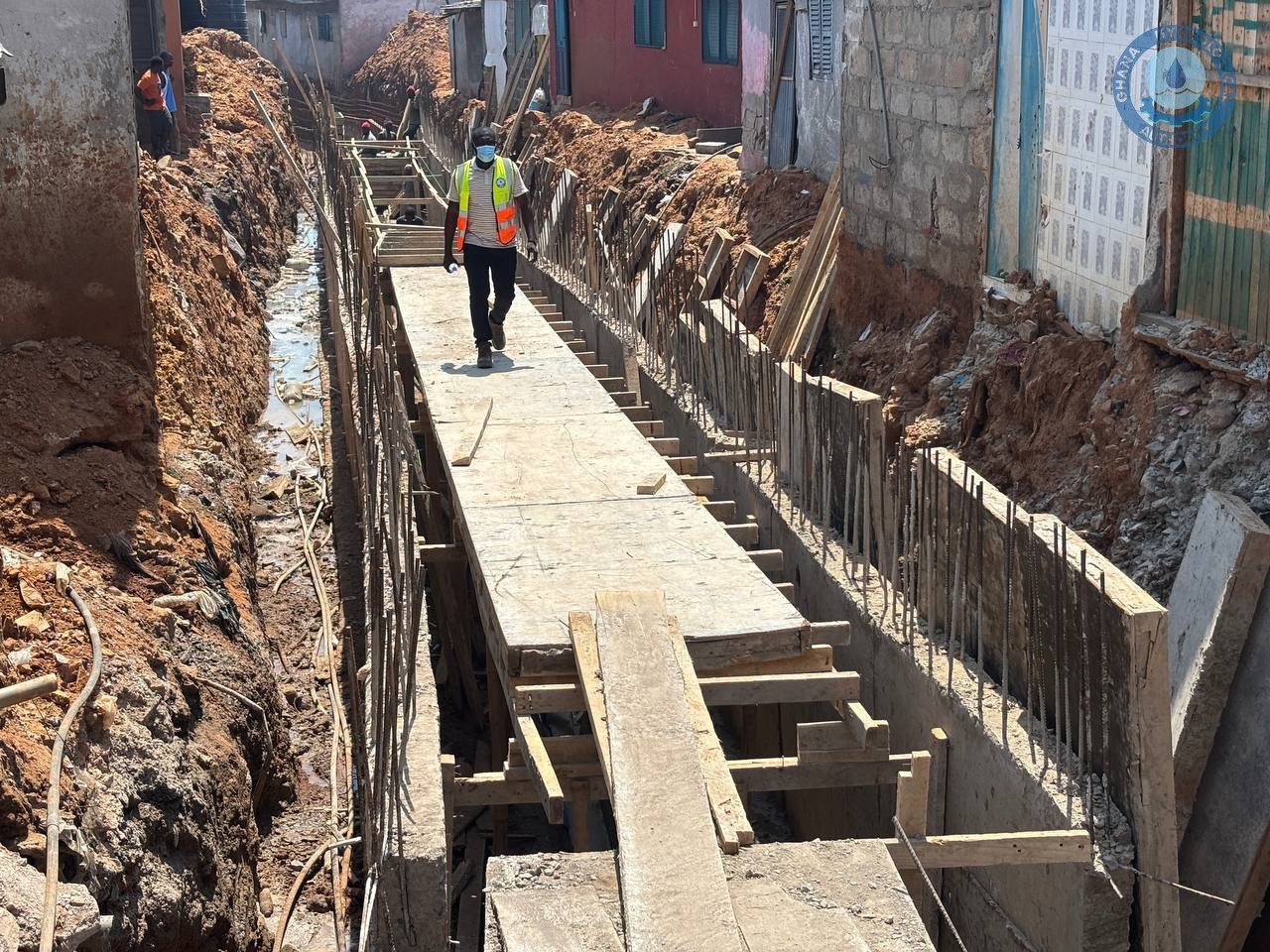
During the visit, the Board inspected six project locations: Weija SCC, Shukura, Mamprobi Bamboi, Chokor , Kokompe Darkuman, and Dzorwulu Onyasia.
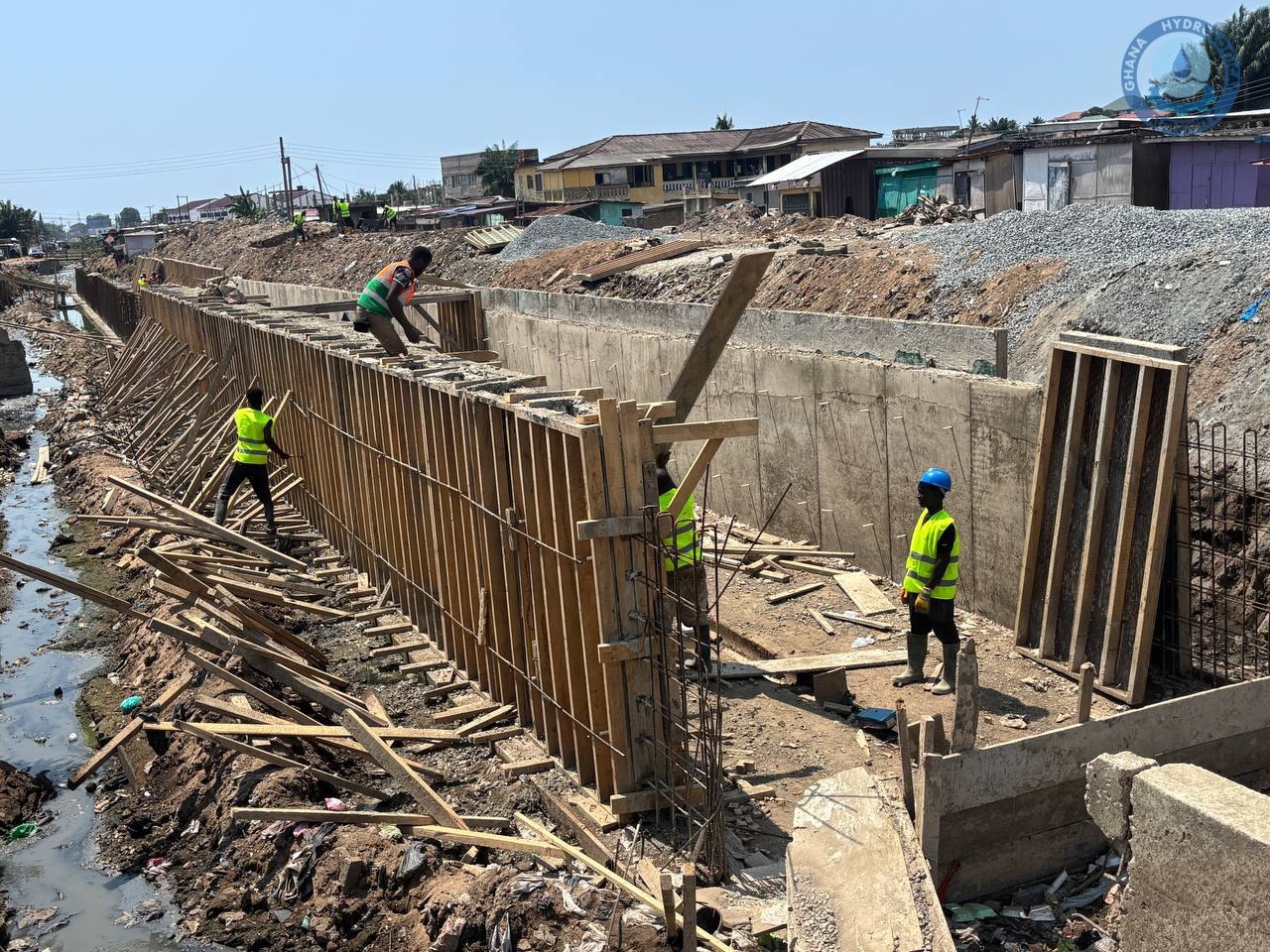
At Weija SCC, where KweMond is undertaking the works, the project forms part of an approximately two-kilometre drainage stretch that will eventually connect to the Korkorjor Drain. The first phase, covering approximately 800 metres, was completed in 2025, while the second phase is expected to add another 400 metres. The current works were reported to be approximately 50% complete.
At Shukura, Remade Company Limited is undertaking the construction of a reinforced concrete drain, with progress estimated at 75%.
The Mamprobi Bamboi project, which involves the construction of an approximately 70-metre drain connecting to the Chemu West drainage system, was about 95% complete. Backfilling activities were ongoing during the visit, following the completion of the major construction activities.
At Chokor, contractor Vuluxx is executing a 140-metre reinforced concrete drain, measuring approximately 4 metres by 2 metres. About 70 metres had been completed. The drain is expected to connect to an existing culvert, helping to evacuate stagnant water and discharge it into the sea.
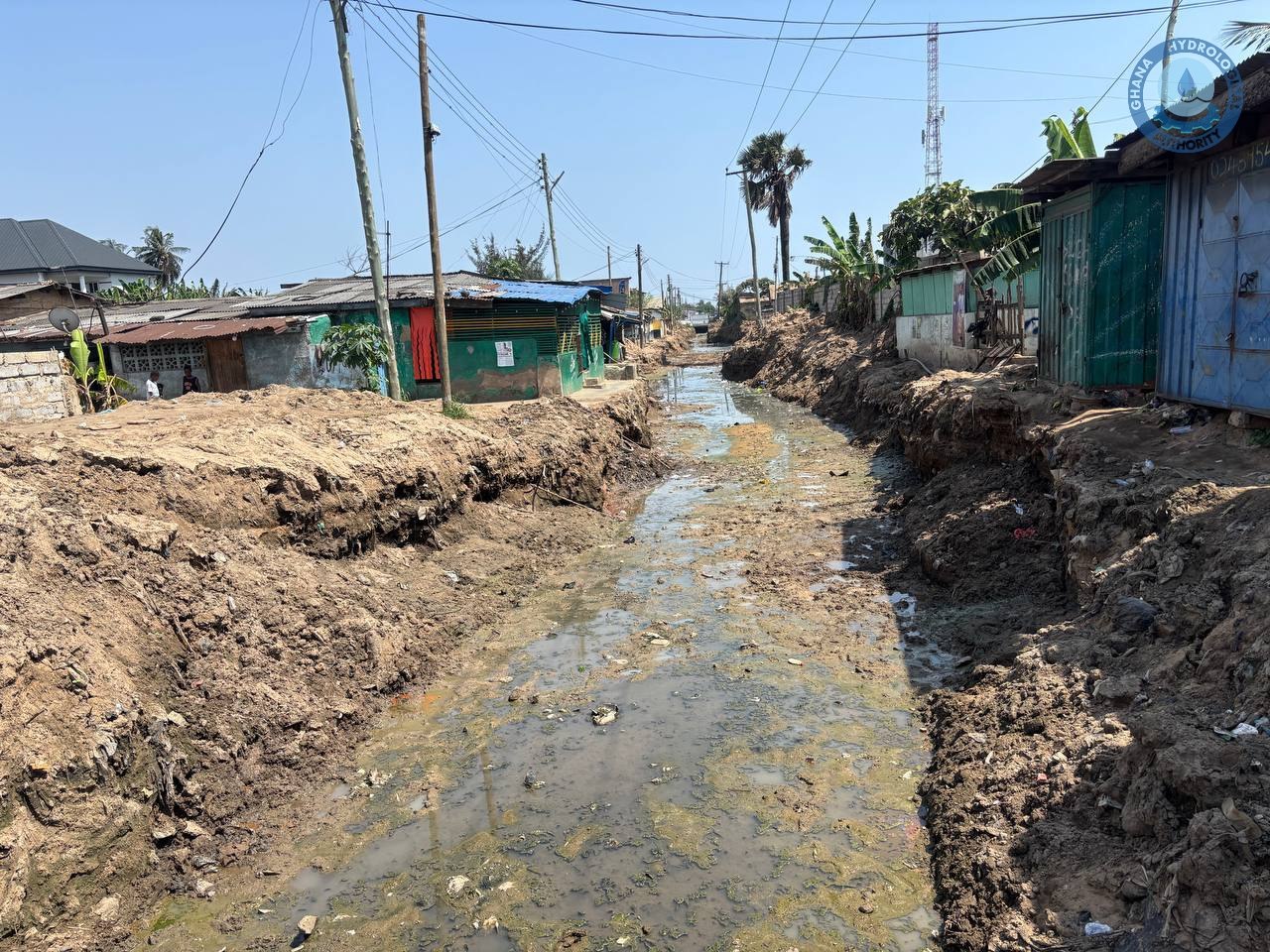
The Board also inspected works at Kokompe, Darkuman, where Teraprime is constructing a 150-metre reinforced concrete drain. Excavation works had been completed at the time of the visit, with subsequent construction activities expected to follow.
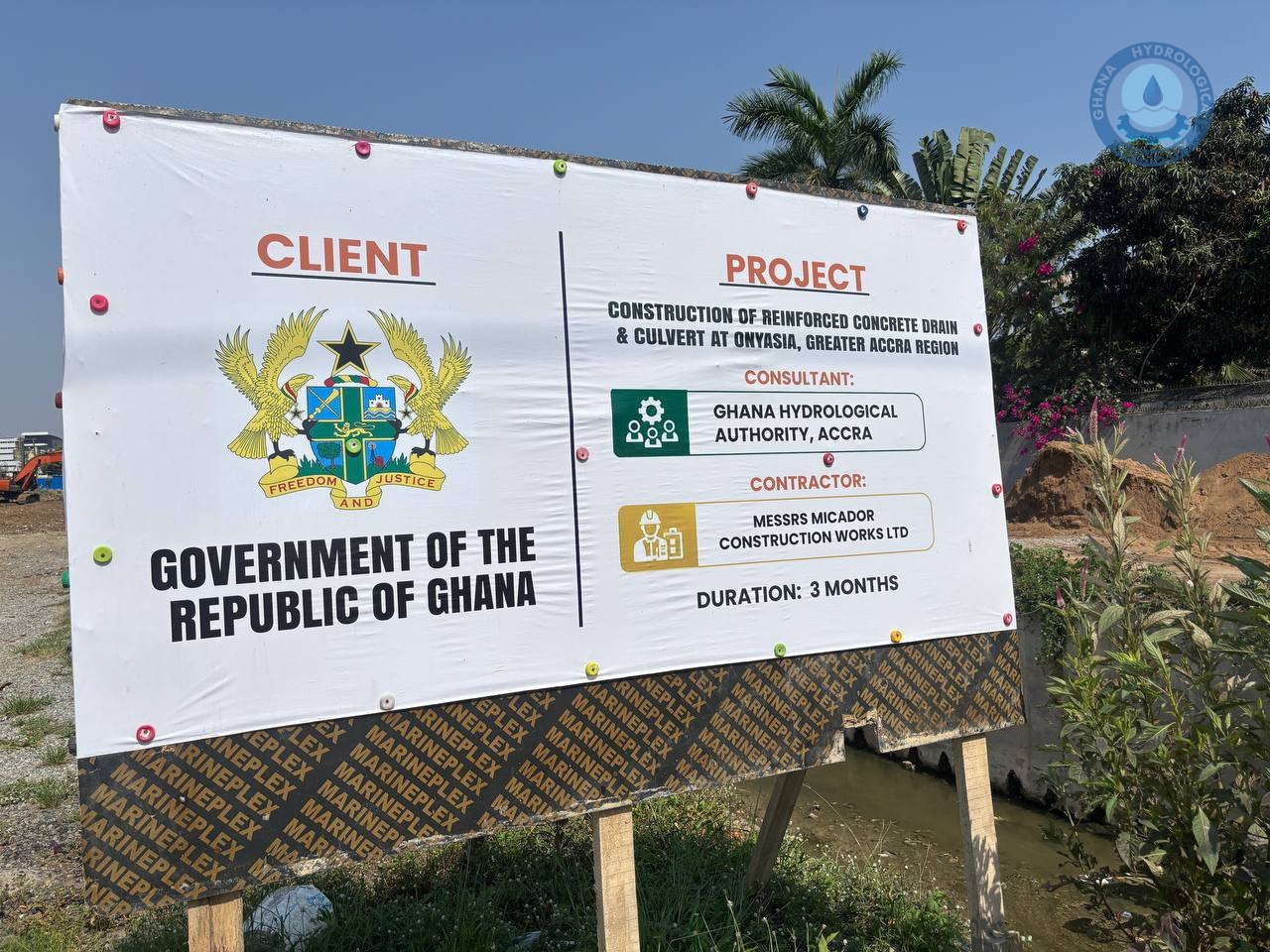
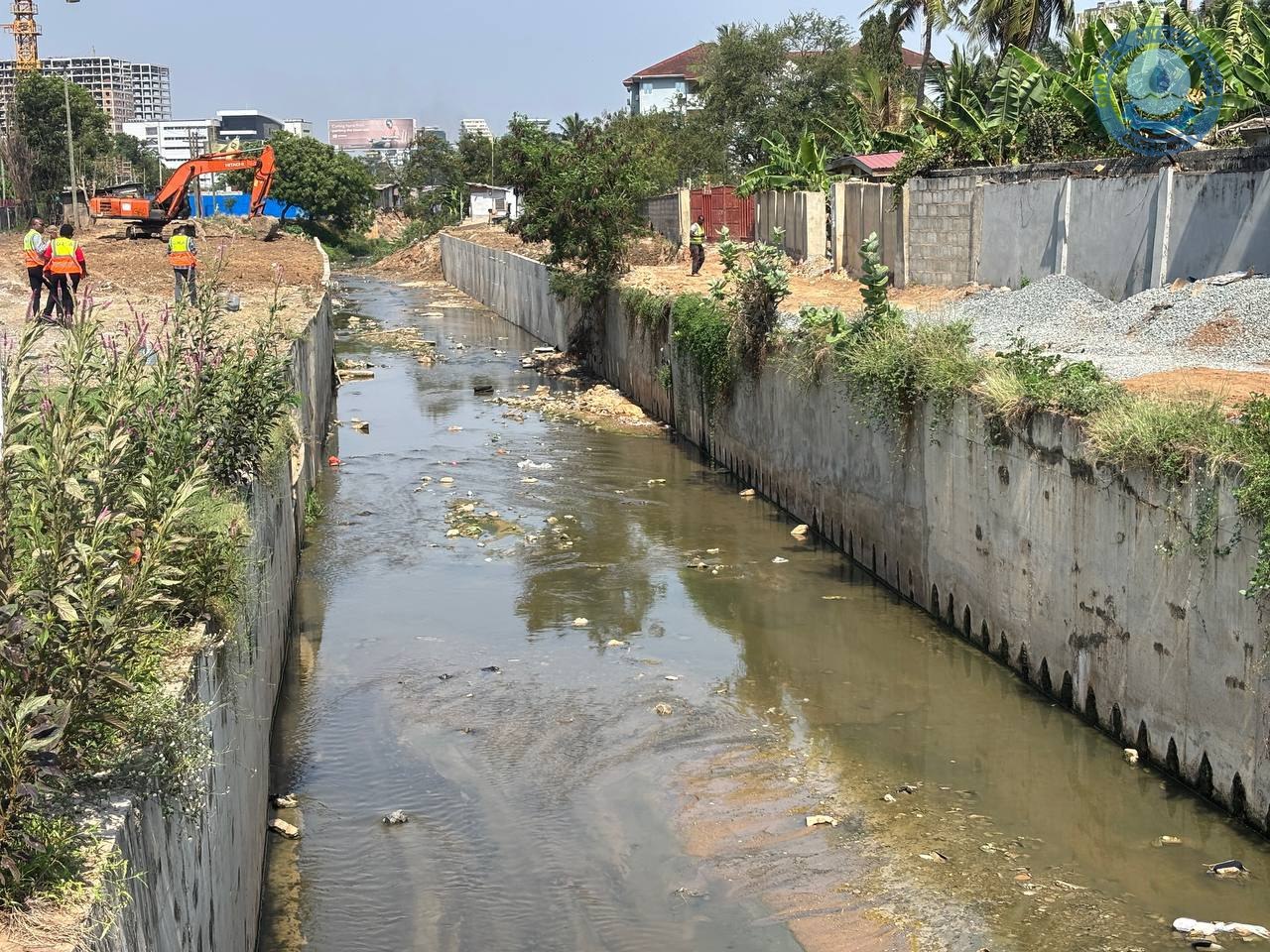
At Dzorwulu Onyasia, the construction of an 80-metre reinforced concrete drain and culvert by Messrs. Micador Construction Works Limited had been completed, with backfilling and site stabilisation activities ongoing.
Beyond assessing the physical progress of the projects, the monitoring exercise provided an opportunity for the Board to emphasise the need for a collective and sustained national effort to address flooding.
The Board Chairman, Dr.John Kusimi,
called on the Government to ensure the timely release of funds to support additional flood mitigation interventions, particularly early in the year. He stressed that making resources available ahead of the major rainy season would allow critical drainage works to be undertaken proactively rather than waiting for flooding incidents to occur.
He also underscored the importance of public education, noting that flooding is not solely attributable to inadequate drainage infrastructure. Human activities, including indiscriminate waste disposal and the obstruction of drainage channels, also contribute significantly to the problem.
The Chairman therefore appealed to the media to intensify public education on responsible environmental practices and the role individuals and communities must play in preventing floods.
He further called on Metropolitan, Municipal and District Assemblies (MMDAs) to strengthen development control and enforce building regulations, particularly by preventing unauthorised developments within floodplains, drainage buffers and wetlands. He emphasised that protecting natural drainage systems is essential to achieving sustainable flood management.
The Chairman also urged the media to help raise public awareness of the Ghana Hydrological Authority’s statutory mandate and its role in flood mitigation. He observed that despite the Authority’s extensive work in hydrological monitoring, flood forecasting and flood mitigation, many Ghanaians remain unfamiliar with its responsibilities.
He encouraged the media to give greater visibility to the Authority’s work and help direct flood-related concerns to the appropriate institution.
The monitoring exercise underscores HYDRO’s commitment to ensuring that investments under the National Flood Control Programme translate into practical interventions that improve drainage conditions and strengthen community resilience.
As Ghana continues to confront the challenges of flooding, the Authority reiterates that effective flood management requires more than infrastructure alone. It demands sustained government investment, strong institutional collaboration, responsible development practices and the active participation of every citizen.
Building a flood-resilient Ghana is a shared responsibility.